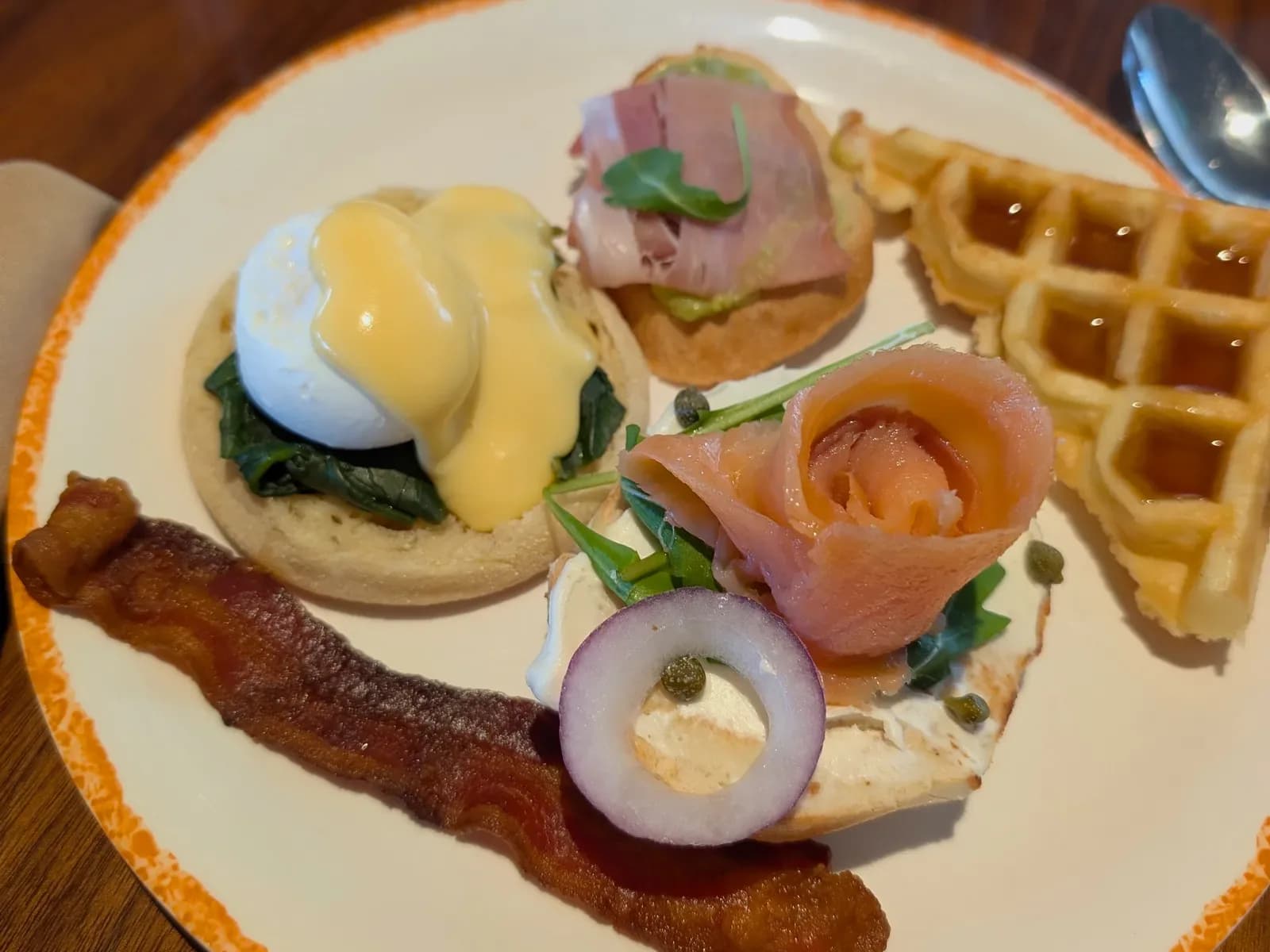
When deciding what to eat before gaming, start with a meal you enjoy and can fit around the session. Aim for protein, a slower-digesting carb, some fruit or veg, and a bit of fat, then adjust the timing to your appetite. The one-to-three-hour window below is my practical choice. Keep water at the desk, and if you use caffeine, plan it well before bedtime.
I don't have a feeding trial on ranked matches behind this plan. It's general nutrition research, shaped here for a two-to-four-hour evening session, and where the evidence is thin, I'll say so.
Plan what to eat before gaming around your day
Lived (my practical take): the one-to-three hour window is what works for me. A real meal that far ahead means I'm not starving at match one and not stuffed at match three. Your stomach may disagree, and that's fine. If the timing doesn't suit your appetite, shift the window.
On a weekday I try to eat before I queue, not after the first loading screen. After that I stop thinking about food until the session is mostly done. That's the whole trick for me: decide once, up front. I also try not to let the gap since my last meal run much past five or six hours, because that's when I start raiding the cupboard mid-match.
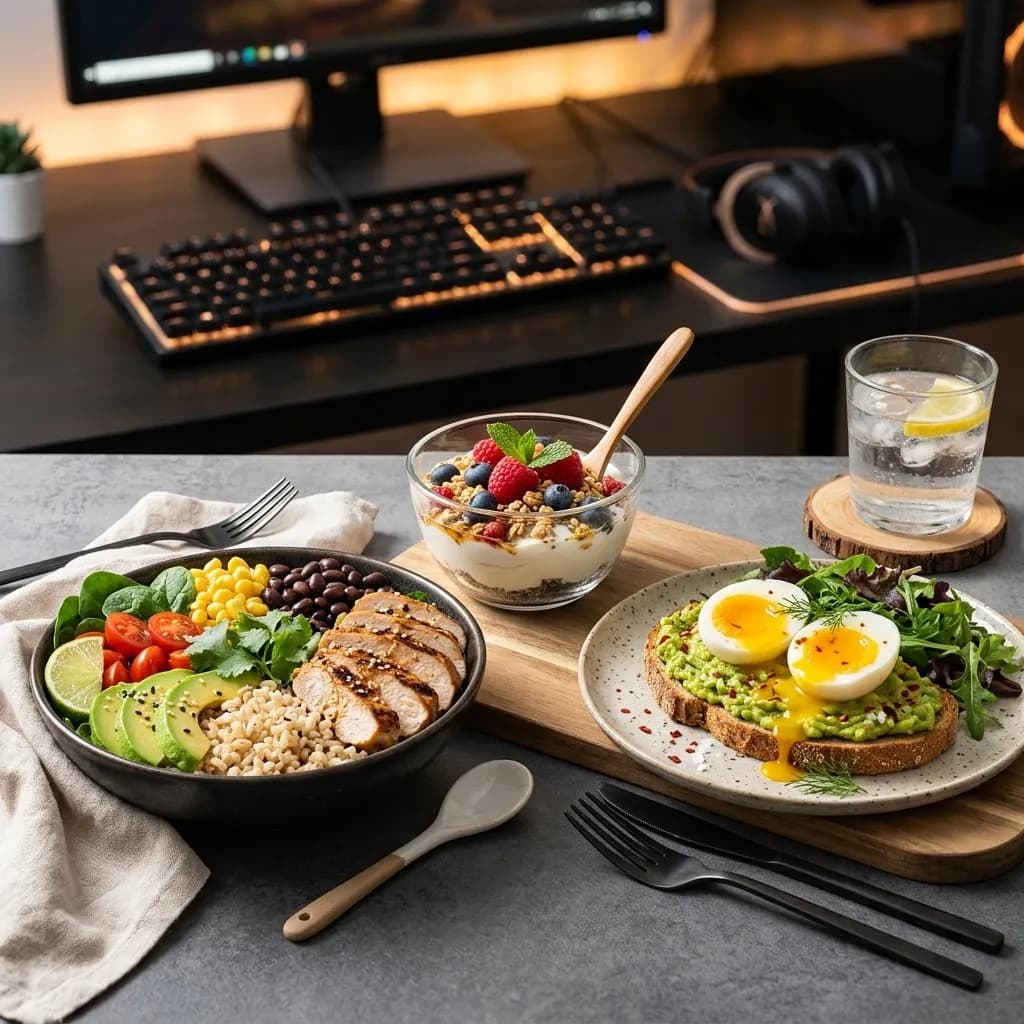
Build the plate in three parts
- Protein: chicken, eggs, fish, yogurt, tofu, beans.
- A slower carb: rice, oats, whole-grain bread, potatoes, pasta.
- Fruit or veg: whatever you'll actually eat.
Add a little fat if the meal needs it: olive oil, cheese, nuts, avocado.
Mixing them changes how fast your blood sugar rises. In one small trial, white rice eaten on its own had a glycemic index of 96. Served with chicken breast, oil and a leafy vegetable, the same rice came in at 50, so blood sugar rose much more gently (Sun et al., 2014). Twelve healthy adults isn't a huge study, but it matches what a mixed plate is for.
Protein earns its spot for another reason: it generally keeps you fuller than the same calories from carbs or fat (Paddon-Jones et al., 2008). That helps when you plan to sit for hours and the kitchen is a long walk away.
For portions, use your hand: a palm of protein, a cupped hand of carbs and a fist of veg or fruit. You don't need a scale.
Why chips and an energy drink often leave you hungrier
In a 1999 trial, twelve teenage boys with obesity ate freely for five hours after a test lunch. After the high-glycemic-index meal they ate 81% more than after the low-GI one, roughly 600 kcal more (Ludwig et al., 1999). It's one small study in one group, and it wasn't done on gamers.
So my takeaway is modest. A snack bag and a sugary can on their own tend to burn fast, and you're hungry again sooner.
Chips aren't bad, and there are no bad foods here. They just don't hold you on their own, so don't ask them to carry a whole evening. Put them next to a real meal and enjoy them.
Caffeine: a dose and a cut-off
This is the part of the plan where I want to be most boring.
Use the least caffeine that works. When 11 active adults in one trial took caffeine every day for 20 days, its boost to their cycling power was still there but shrank over time (Lara et al., 2019). A 20-day trial doesn't tell us what happens between the first and third can in one evening, though.
Stop at least six hours before bed. In a sleep study, 400 mg of caffeine taken six hours before bedtime still disrupted sleep, and the authors back the common advice to skip substantial caffeine for at least six hours before bed (Drake et al., 2013). Bed at midnight means your last can or coffee by about 6 pm. If you're sensitive, go earlier.
For most healthy adults, the FDA cites about 400 mg a day as an amount not generally associated with negative effects, while noting that people vary a lot in how they react (FDA). Treat that as a ceiling. Cans vary widely, so read the label; our guide on how to read an energy-drink label walks through it.
The same FDA page notes that medical experts advise against energy drinks for children and teens. If that's you, or you're buying for someone that age, skip them. With a health condition or medication, ask your doctor or pharmacist about caffeine.
Water within reach
Put water within reach before you start, and drink as you need to.
For a rough check, pale urine suggests you're well hydrated and darker suggests you need more fluid. Researchers found urine colour is a reasonable field estimate, though not a lab-grade one (Armstrong et al., 1994). It's free, and easier than counting cups.
On a long session, take a sip at each loading screen, since the screen is a free reminder.
Three plates to steal
These are everyday foods, about ten minutes in the kitchen. Protein numbers are calculated from USDA FoodData Central values and rounded; your brands will differ a little, so check your labels.
1. Leftover rice bowl
| Time | Serves | Protein per serving |
|---|---|---|
| 10 min (reheat) | 1 | about 42 g |
- 120 g cooked chicken breast (about 37 g protein)
- Rice from 75 g dry, cooked earlier (about 5 g protein)
- A handful of whatever veg is in the fridge, plus a spoon of sauce
Use rice and chicken that went into the fridge within 2 hours of cooking. Reheat the leftovers to 165 °F (74 °C), then add the veg and serve. See safe leftover handling.
2. Eggs on toast with fruit
| Time | Serves | Protein per serving |
|---|---|---|
| 10 min | 1 | about 12 to 13 g from the eggs, plus your bread |
- 2 large eggs (about 12.5 g protein)
- 2 slices of whole-grain bread (check the label; slices vary)
- A piece of fruit
It's fast and cheap when you're already late for the queue.
3. Greek yogurt bowl
| Time | Serves | Protein per serving |
|---|---|---|
| 3 min, no stove | 1 | about 26 g |
- 200 g plain nonfat Greek yogurt (about 20 g protein)
- 40 g oats (about 5 g protein)
- A handful (about 75 g) of blueberries or other berries
It's cold, needs no stove, and works when you're not that hungry.
For more options, see our high-protein pre-game meal ideas. To cook ahead, try a no-stove lunch you can make ahead.
Think of this as a small side quest for your evening: ten minutes in the kitchen before you log on.
Your next move
Tonight, eat a real meal one to three hours before you queue, and put a full glass of water next to your mouse.
Between matches, our loading-screen mobility reset is a good way to spend the gap. More food notes live in The Loadout Pantry.
How this was made: I wrote this with an AI assistant, working from our own reference notes and the studies linked below. Where a source was a single small study, I said so. I'm not a dietitian or a doctor, nobody paid me to say any of this, and nothing here is medical advice.
Sources checked
- 01Sun et al. (2014), Effect of chicken, fat and vegetable on glycaemia and insulinaemia to a white rice-based meal in healthy adults. European Journal of Nutrition
- 02Paddon-Jones et al. (2008), Protein, weight management, and satiety. American Journal of Clinical Nutrition
- 03Ludwig et al. (1999), High glycemic index foods, overeating, and obesity. Pediatrics
- 04Drake et al. (2013), Caffeine effects on sleep taken 0, 3, or 6 hours before going to bed. Journal of Clinical Sleep Medicine
- 05Lara et al. (2019), Time course of tolerance to the performance benefits of caffeine. PLOS ONE
- 06U.S. FDA, Spilling the Beans: How Much Caffeine Is Too Much?
- 07Armstrong et al. (1994), Urinary indices of hydration status. International Journal of Sport Nutrition
- 08USDA FoodData Central (protein per 100 g for chicken breast, white rice, egg, Greek yogurt, oats, blueberries)
Frequently asked questions
Is it OK to game on an empty stomach?
For most healthy adults it's mostly a matter of preference. The practical problem is that a long session on nothing often ends in a rushed, snack-heavy hunger. If you like to play fasted, that's your call. If you manage blood sugar for a medical reason, follow your clinician, not this post.
Should I eat during the session?
You can. A small snack you can eat with one hand is fine. The meal beforehand does most of the work, so the snack is a top-up, not the plan.
Are energy drinks bad?
We don't sort foods or drinks into good and bad. The useful questions are how much caffeine is in the can, how often you drink it, and how close to bed. Read the label, use the least that works, and stop at least six hours before you sleep.
Keep building